This study investigates the feasibility of pre-concentrating lithium ore from the Udawa deposit using hydrocyclones as a pre-treatment method. The escalating demand for lithium, driven by its pivotal role in energy storage for electric vehicles, mobile devices, and renewable energy systems, makes the efficient extraction of this mineral essential. The Udawa deposit, located in Kaduna State, Nigeria, is rich in lithium-bearing minerals within rare-metal pegmatites. Traditional methods for processing lithium ore, such as flotation and gravity separation, are often energy-intensive and environmentally damaging. Hydrocyclones, gravity-based separators, present a promising solution for pre-concentration by efficiently removing gangue minerals and increasing the grade of lithium ore before further processing. The study focused on optimizing the use of hydrocyclones to separate gangue and improve the lithium concentration in the underflow fraction. Results showed that the hydrocyclone effectively upgraded the ore, increasing lithium oxide (Li2O) content from 3.03% in the feed to 4.2% in the underflow, while minimizing gangue in the overflow. The study also highlighted the potential of integrating hydrocyclone pre-concentration with flotation and magnetic separation to maximize lithium recovery. This approach not only reduces processing costs and energy consumption but also supports Nigeria’s economic diversification goals by promoting local mineral processing. The research recommends further optimization of operational parameters and the exploration of industrial-scale applications to improve the efficiency of lithium extraction and recovery from the Udawa pegmatite deposit.
This is an Open Access article, distributed under the terms of the Creative Commons Attribution 4.0 International License (http://creativecommons.org/licenses/by/4.0/), which permits unrestricted use, distribution and reproduction in any medium or format, provided the original work is properly cited.
Lithium has become one of the most sought-after minerals globally, primarily due to its critical role in the production of lithium-ion batteries, which power electric vehicles, mobile devices, and renewable energy systems
[5]
Kundu, P., Pradhan, N., & Rath, S. (2022). Environmental and energy costs of conventional spodumene processing. Journal of Sustainable Mining, 11(2), 175-189.
[5]
. The escalating demand for lithium is fuelled by its pivotal role in energy storage solutions, with applications spanning across several industries, including electronics, pharmaceuticals, glassmaking, and ceramics
[7]
Moon, J., & Fuerstenau, D. W. (2003). Surface crystal chemistry in selective flotation of spodumene from other aluminosilicates. International Journal of Mineral Processing, Vol. 72 No. (1–4), pp. 11–24.
[7]
. As the world transitions toward clean energy and electric mobility, lithium's importance continues to grow. Pegmatites, which are rich in lithium-bearing minerals such as Spodumene, represent a primary source of this resource
[5]
Kundu, P., Pradhan, N., & Rath, S. (2022). Environmental and energy costs of conventional spodumene processing. Journal of Sustainable Mining, 11(2), 175-189.
[6]
Kundu, P., Rath, S., Das, S., Parhi, P. K., & Angadi, S. (2022). Recovery of lithium from spodumene-bearing pegmatites: A comprehensive review on geological reserves, beneficiation, and extraction. Powder Technology, Vol. 415, Article 118142.
. Recently, Nigeria has reported substantial discoveries of lithium deposits in pegmatites of the Pan-African age, with several high-grade deposits found in various states across the country, including the Udawa deposit in Kaduna State
[8]
Olade, O. (2024). Lithium geo-resources in Pan-African pegmatites of Nigeria: An evaluation of their geological and geochemical characteristics and implications for mineral exploration. Global Journal of Pure and Applied Sciences.
The study of lithium ore and its processing techniques is essential to maximizing the economic potential of these resources. Understanding the characteristics of the ore body, such as mineralogy, grade, and liberation size, is crucial for determining the most efficient and cost-effective methods for extraction. Mineral processing plays a vital role in this process, as it involves techniques that separate valuable minerals from gangue (waste material). The efficiency of these techniques, such as flotation, gravity separation, and magnetic separation, depends on several factors, including ore texture and mineral association
[1]
Gu, M. (2003). The role of mineralogy in the efficiency of mineral processing. International Journal of Mineral Processing, 70(3), 205-218.
[1]
. However, conventional methods of processing lithium ore, especially those targeting spodumene, are often energy-intensive, environmentally damaging, and costly
[5]
Kundu, P., Pradhan, N., & Rath, S. (2022). Environmental and energy costs of conventional spodumene processing. Journal of Sustainable Mining, 11(2), 175-189.
[5]
. Thus, there is a need for more sustainable and efficient processing routes that can minimize environmental impact while ensuring maximum recovery.
One of the most promising approaches for improving the efficiency of lithium ore processing is the pre-concentration of ore, particularly using hydrocyclones. Hydrocyclones are a type of gravity-based separator that can efficiently remove gangue minerals and increase the grade of the ore before further processing. The use of hydrocyclones for pre-concentration has been widely studied in the context of various ores, including those containing lithium-bearing minerals
[4]
Khoshdel, M., Singh, P., & Nikoloski, A. (2019). Pre-concentration techniques for lithium-bearing ores using hydrocyclones. International Journal of Mineral Processing, 141, 45-55.
[4]
. Pre-concentration using hydrocyclones offers significant advantages, such as reducing the energy required for subsequent processing stages, lowering processing costs, and minimizing the volume of waste generated
[9]
Prasad, B. (2007). Hydrocyclones in mineral processing. In Proceedings of the International Mineral Processing Congress, 23(4), 100-115.
[9]
. By concentrating the ore before it undergoes more intensive beneficiation processes like flotation, the overall efficiency of the processing plant is greatly enhanced.
The Udawa deposit, located in Kaduna State, Nigeria, is a significant target for lithium exploration due to its rich mineralization in rare-metal pegmatites containing lithium, tin, and tantalum. The geological map of Udawa (Figure 1) illustrates the complex mineralogical structure of the area, including the Gneiss-Migmatite Complex, Kushaka Schist Belt, and Banded Iron Formation
[3]
Kehide, R. A., Ibrahim, G., Danbatta, U., Ogunleye, P., & Klotzli, U. (2021). Field occurrence, petrography, and structural characteristics of the basement rocks in the northern part of Kushaka and Birnin Gwari schist belts, northwestern Nigeria. Journal of Natural Sciences Research, Vol. 12, No. 12.
. Despite the promising mineral potential of the Udawa pegmatites, much remains to be understood about their mineralization and the most efficient methods for extracting lithium. Studies on pre-concentration techniques, such as hydrocyclones, have the potential to unlock the economic value of these deposits by improving the efficiency of lithium extraction.
This research aims to design an optimal processing route for the concentration of lithium minerals in the Udawa pegmatites, focusing on pre-concentration using hydrocyclones. By evaluating the amenability of the ore to pre-concentration methods and determining the ideal processing conditions, the goal is to produce high-grade lithium concentrates with improved recovery rates, while minimizing energy consumption and waste generation. The feasibility of using hydrocyclones as part of a pre-concentration stage will be assessed alongside other beneficiation techniques like flotation and magnetic separation.
This research is not only relevant for optimizing the lithium extraction process but also aligns with Nigeria’s broader economic diversification goals. The Nigerian government has recognized the potential of its abundant mineral resources, including lithium, to drive economic growth and industrial development. By encouraging local processing rather than the export of raw minerals, Nigeria aims to create jobs, enhance its GDP, and reduce its reliance on imported energy sources. Developing an environmentally sustainable and economically viable lithium extraction process from the Udawa deposit will support Nigeria’s transition to a cleaner energy future and contribute to global efforts to combat climate change through the use of renewable energy technologies
[10]
Wills, B. A. (2016). Mineral processing technology: An introduction to the practical aspects of ore treatment and mineral recovery. 8th ed. Elsevier.
[10]
.
This study will explore the feasibility of using hydrocyclones for the pre-concentration of lithium ore from the Udawa pegmatites. It aims to design an optimal, cost-effective, and environmentally sustainable processing route that can maximize the recovery of lithium while minimizing energy consumption and environmental impact. Through this research, Nigeria has the opportunity to establish itself as a key player in the global lithium market, fostering economic growth and supporting the transition to a cleaner, more sustainable energy future.
Economic and Cost Benefits of Pre-Concentration
The feasibility study on pre-concentrating lithium ore from the Udawa deposit using hydrocyclones demonstrates notable economic and cost benefits. The results show that hydrocyclones effectively upgraded the lithium ore, increasing the lithium oxide (Li2O) content from 3.03% in the feed to 4.2% in the underflow, while minimizing gangue in the overflow. This improvement in ore grade significantly reduces the need for energy-intensive processes like flotation, lowering both processing costs and energy consumption. Additionally, by eliminating a large portion of the gangue early in the process, hydrocyclones enhance the efficiency of subsequent stages, such as flotation and magnetic separation, which ultimately boosts overall lithium recovery. The study highlights that integrating hydrocyclones with existing methods not only optimizes resource utilization but also supports environmental sustainability by reducing chemical usage and waste generation. For Nigeria, this approach contributes to the country’s economic diversification goals by promoting local mineral processing, reducing reliance on raw material exports, and positioning the nation as a key player in the global lithium supply chain
[2]
Isa, I., Ajaka, E. O., Adebayo, A. O., & Alabi, O. O. (2024). Beneficiation of lithium from spodumene-rich pegmatite: A review. International Journal of Advances in Engineering and Management (IJAEM), 6(12), 19–26.
The area selected for sample collection in this research is located in Kaduna State, in the northwestern region of Nigeria. This region, rich in geological diversity, is bounded by latitudes 09° 00' 44'' N to 11° 30' 00'' N and longitudes 05° 00' 34'' E to 06° 45' 17'' E, covering a total area of approximately 3,031.7 square kilometers.
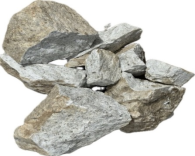
Figure 1. Texture and Appearance of Crude Samples of Udawa Lithium Ore.
The feasibility study on the pre-concentration of lithium ore from the Udawa deposit using hydrocyclones aims to explore an efficient and cost-effective method for enhancing lithium recovery while minimizing gangue interference before flotation. Pre-concentration serves as a crucial step in optimizing the ore for subsequent processing stages by upgrading the feed material and reducing the processing load.
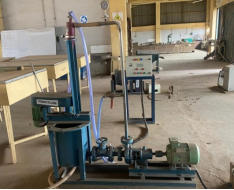
The lithium ore sample from the Udawa pegmatite deposit was initially sized to -63 +45 microns and mixed with water to create a slurry. This slurry was fed into the Cavex Hydrocyclone at a pressure of 150 kPa, where centrifugal forces facilitated the separation process. The hydrocyclone's primary function was to separate finer gangue particles, typically less than 20 microns, directing them to the overflow, while the coarser, lithium-rich particles, such as spodumene, settled as underflow.
Both the underflow and overflow fractions were collected and weighed to evaluate the separation efficiency. The underflow, enriched with Li2O content, weighed 777.7 g, while the overflow contained the fine gangue, weighing 220.6 g. A chemical analysis of each fraction was carried out to determine the Li2O concentration, and the results confirmed that the hydrocyclone effectively concentrated lithium oxide in the underflow, while minimizing the presence of gangue in the overflow.
For accuracy, the process was repeated twice under identical conditions, and the results were averaged to minimize experimental variations
[10]
Wills, B. A. (2016). Mineral processing technology: An introduction to the practical aspects of ore treatment and mineral recovery. 8th ed. Elsevier.
[10]
. These experiments utilized 1000 g samples of the pretreated ore within the same particle size range (-63 +45 microns), ensuring consistency in the test setup. After desliming, the ore was subjected to flotation experiments under optimized reagent dosages, with the hydrocyclone serving to improve separation efficiency by selectively removing fine gangue particles before flotation.
The integration of hydrocyclone desliming with flotation proved beneficial in enhancing both concentrate grade and overall recovery. The chemical analysis of the flotation concentrates and tailings was performed using Atomic Absorption Spectroscopy (AAS), which allowed for the determination of the Li2O content in both the concentrate and the tailings. The recovery rate was then calculated by comparing the Li2O recovered in the concentrate to the initial Li2O content in the ore feed, offering a quantitative measure of the process's efficiency.
This feasibility study demonstrated that using hydrocyclones for pre-concentration can effectively upgrade lithium-bearing ore from the Udawa deposit, reducing gangue content early in the process, which ultimately maximizes lithium recovery during subsequent flotation stages. The methodology proves to be a cost-effective and environmentally sustainable option for processing lithium ores, making it an essential step in the development of efficient lithium extraction routes in Nigeria.
3. Result and Discussion
Table 1. Desliming Process Using Hydrocyclone of Feed Size of -63+45 Microns.
Fraction
Weight (g)
Li2O %
Feed Sample
1000
3.03
Underflow
777.5
4.2
Overflow
220.6
0.32
Table 1 illustrates the efficiency of the hydrocyclone desliming process applied to a feed sample of lithium ore with a particle size range of -63 +45 microns. The purpose of this process is to enhance the concentration of lithium (Li2O) while separating undesirable gangue materials, thus optimizing the ore for further processing.
The initial feed sample weighs 1,000 g, with a Li2O content of 3.03%. This sample represents the raw, unprocessed ore, which contains a mixture of lithium-bearing minerals and gangue materials. The goal of the desliming process is to increase the lithium concentration by separating fine gangue particles, which are typically not valuable, from the more valuable lithium-bearing minerals, such as spodumene.
After being processed in the hydrocyclone, the underflow weighs 777.5 g, representing the denser, lithium-rich fraction of the ore. The Li2O content in the underflow has increased to 4.2%, indicating a successful concentration of the lithium-bearing minerals. The increase in lithium content from 3.03% in the feed to 4.2% in the underflow demonstrates that the hydrocyclone has effectively separated the gangue and concentrated the lithium-bearing particles. This concentration step is crucial because the underflow, which is enriched in lithium, now represents a higher-grade material that is more valuable for subsequent processing or extraction.
On the other hand, the overflow weighs 220.6 g and contains only 0.32% Li2O. The low lithium content in the overflow indicates that most of the lithium-bearing minerals have been removed and concentrated in the underflow. The overflow, which consists predominantly of fine gangue materials, has been effectively separated from the valuable lithium minerals during the desliming process. This shows that the hydrocyclone can efficiently reject waste materials, which is a significant advantage in reducing the volume of material that requires further processing.
From a mass balance perspective, 78% of the initial feed mass (777.5 g) is concentrated in the underflow, while 22% (220.6 g) is discarded as overflow. The overflow, with its minimal lithium content, can be considered waste, and its removal reduces the load on subsequent processing stages. The effective rejection of gangue and the concentration of lithium in the underflow are key benefits of the hydrocyclone desliming process, contributing to both the efficiency and cost-effectiveness of the overall mineral processing flow.
The increase in lithium concentration in the underflow also underscores the value of using hydrocyclones in pre-concentration. This pre-concentration step not only enhances the lithium grade of the material for further processing but also reduces the amount of gangue that would otherwise need to be handled in subsequent flotation or other beneficiation processes. Consequently, the use of hydrocyclones can lead to reduced energy consumption, lower operational costs, and improved recovery rates, making it a vital step in the efficient processing of lithium ore.
Therefore, the hydrocyclone desliming process shown in Table 1 effectively concentrates lithium-bearing minerals and rejects gangue materials. This pre-concentration process plays a critical role in upgrading the ore before it enters more complex and expensive downstream processing stages. The results demonstrate that the hydrocyclone is an efficient tool for enhancing lithium recovery and improving the overall economic viability of lithium ore processing. The 78% of the mass being concentrated in the underflow and the minimal lithium content in the overflow demonstrate the hydrocyclone's ability to effectively segregate valuable lithium from waste materials, making it a crucial step in the lithium extraction process.
4. Conclusion and Recommendation
This study highlights the effectiveness of hydrocyclones for pre-concentrating lithium ore from the Udawa deposit. The hydrocyclone successfully separated lithium-bearing minerals from gangue, increasing the Li2O content from 3.03% in the feed to 4.2% in the underflow, while reducing gangue in the overflow to 0.32% Li2O. This process concentrated 78% of the feed mass, reducing waste and improving ore quality for subsequent processing stages, making it more cost-effective. Optimize operational parameters such as pressure, slurry density, and feed size to improve separation efficiency and lithium recovery. Integrate the hydrocyclone pre-concentration process with flotation to maximize lithium recovery. Conduct scale-up experiments to assess the process at industrial scales. Perform additional mineralogical studies on the Udawa deposit to optimize pre-concentration and flotation stages for better lithium recovery.
Abbreviations
Li2O
Lithium Oxide
AAS
Atomic Absorption Spectroscopy
EV
Electric Vehicle
kPa
Kilopascal
%
Percentage
g
Gram
µm (microns)
Micrometers
Author Contributions
Ibrahim Isa: Conceptualization, Funding acquisition, Investigation, Methodology
Ebenezer Oyedele Ajaka: Supervision
Albert Ojo Adebayo: Formal Analysis, Supervision
Oladuni Oyelola Alabi: Supervision, Validation
Conflicts of Interest
The authors declare that there are no conflicts of interest associated with this research.
References
[1]
Gu, M. (2003). The role of mineralogy in the efficiency of mineral processing. International Journal of Mineral Processing, 70(3), 205-218.
[2]
Isa, I., Ajaka, E. O., Adebayo, A. O., & Alabi, O. O. (2024). Beneficiation of lithium from spodumene-rich pegmatite: A review. International Journal of Advances in Engineering and Management (IJAEM), 6(12), 19–26.
Kehide, R. A., Ibrahim, G., Danbatta, U., Ogunleye, P., & Klotzli, U. (2021). Field occurrence, petrography, and structural characteristics of the basement rocks in the northern part of Kushaka and Birnin Gwari schist belts, northwestern Nigeria. Journal of Natural Sciences Research, Vol. 12, No. 12.
Khoshdel, M., Singh, P., & Nikoloski, A. (2019). Pre-concentration techniques for lithium-bearing ores using hydrocyclones. International Journal of Mineral Processing, 141, 45-55.
[5]
Kundu, P., Pradhan, N., & Rath, S. (2022). Environmental and energy costs of conventional spodumene processing. Journal of Sustainable Mining, 11(2), 175-189.
[6]
Kundu, P., Rath, S., Das, S., Parhi, P. K., & Angadi, S. (2022). Recovery of lithium from spodumene-bearing pegmatites: A comprehensive review on geological reserves, beneficiation, and extraction. Powder Technology, Vol. 415, Article 118142.
Moon, J., & Fuerstenau, D. W. (2003). Surface crystal chemistry in selective flotation of spodumene from other aluminosilicates. International Journal of Mineral Processing, Vol. 72 No. (1–4), pp. 11–24.
[8]
Olade, O. (2024). Lithium geo-resources in Pan-African pegmatites of Nigeria: An evaluation of their geological and geochemical characteristics and implications for mineral exploration. Global Journal of Pure and Applied Sciences.
Isa, I., Ajaka, E. O., Adebayo, A. O., Alabi, O. O. (2025). Feasibility Study on Pre-concentration of Lithium Ore from Udawa Deposit Using Hydrocyclones. International Journal of Mineral Processing and Extractive Metallurgy, 10(4), 160-164. https://doi.org/10.11648/j.ijmpem.20251004.16
Isa, I.; Ajaka, E. O.; Adebayo, A. O.; Alabi, O. O. Feasibility Study on Pre-concentration of Lithium Ore from Udawa Deposit Using Hydrocyclones. Int. J. Miner. Process. Extr. Metall.2025, 10(4), 160-164. doi: 10.11648/j.ijmpem.20251004.16
Isa I, Ajaka EO, Adebayo AO, Alabi OO. Feasibility Study on Pre-concentration of Lithium Ore from Udawa Deposit Using Hydrocyclones. Int J Miner Process Extr Metall. 2025;10(4):160-164. doi: 10.11648/j.ijmpem.20251004.16
@article{10.11648/j.ijmpem.20251004.16,
  author = {Ibrahim Isa and Ebenezer Oyedele Ajaka and Albert Ojo Adebayo and Oladuni Oyelola Alabi},
  title = {Feasibility Study on Pre-concentration of Lithium Ore from Udawa Deposit Using Hydrocyclones},
  journal = {International Journal of Mineral Processing and Extractive Metallurgy},
  volume = {10},
  number = {4},
  pages = {160-164},
  doi = {10.11648/j.ijmpem.20251004.16},
  url = {https://doi.org/10.11648/j.ijmpem.20251004.16},
  eprint = {https://article.sciencepublishinggroup.com/pdf/10.11648.j.ijmpem.20251004.16},
  abstract = {This study investigates the feasibility of pre-concentrating lithium ore from the Udawa deposit using hydrocyclones as a pre-treatment method. The escalating demand for lithium, driven by its pivotal role in energy storage for electric vehicles, mobile devices, and renewable energy systems, makes the efficient extraction of this mineral essential. The Udawa deposit, located in Kaduna State, Nigeria, is rich in lithium-bearing minerals within rare-metal pegmatites. Traditional methods for processing lithium ore, such as flotation and gravity separation, are often energy-intensive and environmentally damaging. Hydrocyclones, gravity-based separators, present a promising solution for pre-concentration by efficiently removing gangue minerals and increasing the grade of lithium ore before further processing. The study focused on optimizing the use of hydrocyclones to separate gangue and improve the lithium concentration in the underflow fraction. Results showed that the hydrocyclone effectively upgraded the ore, increasing lithium oxide (Li2O) content from 3.03% in the feed to 4.2% in the underflow, while minimizing gangue in the overflow. The study also highlighted the potential of integrating hydrocyclone pre-concentration with flotation and magnetic separation to maximize lithium recovery. This approach not only reduces processing costs and energy consumption but also supports Nigeria’s economic diversification goals by promoting local mineral processing. The research recommends further optimization of operational parameters and the exploration of industrial-scale applications to improve the efficiency of lithium extraction and recovery from the Udawa pegmatite deposit.},
 year = {2025}
}
TY  - JOUR
T1  - Feasibility Study on Pre-concentration of Lithium Ore from Udawa Deposit Using Hydrocyclones
AU  - Ibrahim Isa
AU  - Ebenezer Oyedele Ajaka
AU  - Albert Ojo Adebayo
AU  - Oladuni Oyelola Alabi
Y1  - 2025/12/29
PY  - 2025
N1  - https://doi.org/10.11648/j.ijmpem.20251004.16
DO  - 10.11648/j.ijmpem.20251004.16
T2  - International Journal of Mineral Processing and Extractive Metallurgy
JF  - International Journal of Mineral Processing and Extractive Metallurgy
JO  - International Journal of Mineral Processing and Extractive Metallurgy
SP  - 160
EP  - 164
PB  - Science Publishing Group
SN  - 2575-1859
UR  - https://doi.org/10.11648/j.ijmpem.20251004.16
AB  - This study investigates the feasibility of pre-concentrating lithium ore from the Udawa deposit using hydrocyclones as a pre-treatment method. The escalating demand for lithium, driven by its pivotal role in energy storage for electric vehicles, mobile devices, and renewable energy systems, makes the efficient extraction of this mineral essential. The Udawa deposit, located in Kaduna State, Nigeria, is rich in lithium-bearing minerals within rare-metal pegmatites. Traditional methods for processing lithium ore, such as flotation and gravity separation, are often energy-intensive and environmentally damaging. Hydrocyclones, gravity-based separators, present a promising solution for pre-concentration by efficiently removing gangue minerals and increasing the grade of lithium ore before further processing. The study focused on optimizing the use of hydrocyclones to separate gangue and improve the lithium concentration in the underflow fraction. Results showed that the hydrocyclone effectively upgraded the ore, increasing lithium oxide (Li2O) content from 3.03% in the feed to 4.2% in the underflow, while minimizing gangue in the overflow. The study also highlighted the potential of integrating hydrocyclone pre-concentration with flotation and magnetic separation to maximize lithium recovery. This approach not only reduces processing costs and energy consumption but also supports Nigeria’s economic diversification goals by promoting local mineral processing. The research recommends further optimization of operational parameters and the exploration of industrial-scale applications to improve the efficiency of lithium extraction and recovery from the Udawa pegmatite deposit.
VL  - 10
IS  - 4
ER  -
Isa, I., Ajaka, E. O., Adebayo, A. O., Alabi, O. O. (2025). Feasibility Study on Pre-concentration of Lithium Ore from Udawa Deposit Using Hydrocyclones. International Journal of Mineral Processing and Extractive Metallurgy, 10(4), 160-164. https://doi.org/10.11648/j.ijmpem.20251004.16
Isa, I.; Ajaka, E. O.; Adebayo, A. O.; Alabi, O. O. Feasibility Study on Pre-concentration of Lithium Ore from Udawa Deposit Using Hydrocyclones. Int. J. Miner. Process. Extr. Metall.2025, 10(4), 160-164. doi: 10.11648/j.ijmpem.20251004.16
Isa I, Ajaka EO, Adebayo AO, Alabi OO. Feasibility Study on Pre-concentration of Lithium Ore from Udawa Deposit Using Hydrocyclones. Int J Miner Process Extr Metall. 2025;10(4):160-164. doi: 10.11648/j.ijmpem.20251004.16
@article{10.11648/j.ijmpem.20251004.16,
  author = {Ibrahim Isa and Ebenezer Oyedele Ajaka and Albert Ojo Adebayo and Oladuni Oyelola Alabi},
  title = {Feasibility Study on Pre-concentration of Lithium Ore from Udawa Deposit Using Hydrocyclones},
  journal = {International Journal of Mineral Processing and Extractive Metallurgy},
  volume = {10},
  number = {4},
  pages = {160-164},
  doi = {10.11648/j.ijmpem.20251004.16},
  url = {https://doi.org/10.11648/j.ijmpem.20251004.16},
  eprint = {https://article.sciencepublishinggroup.com/pdf/10.11648.j.ijmpem.20251004.16},
  abstract = {This study investigates the feasibility of pre-concentrating lithium ore from the Udawa deposit using hydrocyclones as a pre-treatment method. The escalating demand for lithium, driven by its pivotal role in energy storage for electric vehicles, mobile devices, and renewable energy systems, makes the efficient extraction of this mineral essential. The Udawa deposit, located in Kaduna State, Nigeria, is rich in lithium-bearing minerals within rare-metal pegmatites. Traditional methods for processing lithium ore, such as flotation and gravity separation, are often energy-intensive and environmentally damaging. Hydrocyclones, gravity-based separators, present a promising solution for pre-concentration by efficiently removing gangue minerals and increasing the grade of lithium ore before further processing. The study focused on optimizing the use of hydrocyclones to separate gangue and improve the lithium concentration in the underflow fraction. Results showed that the hydrocyclone effectively upgraded the ore, increasing lithium oxide (Li2O) content from 3.03% in the feed to 4.2% in the underflow, while minimizing gangue in the overflow. The study also highlighted the potential of integrating hydrocyclone pre-concentration with flotation and magnetic separation to maximize lithium recovery. This approach not only reduces processing costs and energy consumption but also supports Nigeria’s economic diversification goals by promoting local mineral processing. The research recommends further optimization of operational parameters and the exploration of industrial-scale applications to improve the efficiency of lithium extraction and recovery from the Udawa pegmatite deposit.},
 year = {2025}
}
TY  - JOUR
T1  - Feasibility Study on Pre-concentration of Lithium Ore from Udawa Deposit Using Hydrocyclones
AU  - Ibrahim Isa
AU  - Ebenezer Oyedele Ajaka
AU  - Albert Ojo Adebayo
AU  - Oladuni Oyelola Alabi
Y1  - 2025/12/29
PY  - 2025
N1  - https://doi.org/10.11648/j.ijmpem.20251004.16
DO  - 10.11648/j.ijmpem.20251004.16
T2  - International Journal of Mineral Processing and Extractive Metallurgy
JF  - International Journal of Mineral Processing and Extractive Metallurgy
JO  - International Journal of Mineral Processing and Extractive Metallurgy
SP  - 160
EP  - 164
PB  - Science Publishing Group
SN  - 2575-1859
UR  - https://doi.org/10.11648/j.ijmpem.20251004.16
AB  - This study investigates the feasibility of pre-concentrating lithium ore from the Udawa deposit using hydrocyclones as a pre-treatment method. The escalating demand for lithium, driven by its pivotal role in energy storage for electric vehicles, mobile devices, and renewable energy systems, makes the efficient extraction of this mineral essential. The Udawa deposit, located in Kaduna State, Nigeria, is rich in lithium-bearing minerals within rare-metal pegmatites. Traditional methods for processing lithium ore, such as flotation and gravity separation, are often energy-intensive and environmentally damaging. Hydrocyclones, gravity-based separators, present a promising solution for pre-concentration by efficiently removing gangue minerals and increasing the grade of lithium ore before further processing. The study focused on optimizing the use of hydrocyclones to separate gangue and improve the lithium concentration in the underflow fraction. Results showed that the hydrocyclone effectively upgraded the ore, increasing lithium oxide (Li2O) content from 3.03% in the feed to 4.2% in the underflow, while minimizing gangue in the overflow. The study also highlighted the potential of integrating hydrocyclone pre-concentration with flotation and magnetic separation to maximize lithium recovery. This approach not only reduces processing costs and energy consumption but also supports Nigeria’s economic diversification goals by promoting local mineral processing. The research recommends further optimization of operational parameters and the exploration of industrial-scale applications to improve the efficiency of lithium extraction and recovery from the Udawa pegmatite deposit.
VL  - 10
IS  - 4
ER  -




 Share This Article
 Twitter
 Linked In
 Facebook
 Copy
Copy Download